FAQ (Driftless, Spring Green, Avoca, Lone Rock and Muscoda)
Common Driftless Questions
What is the Driftless Area?
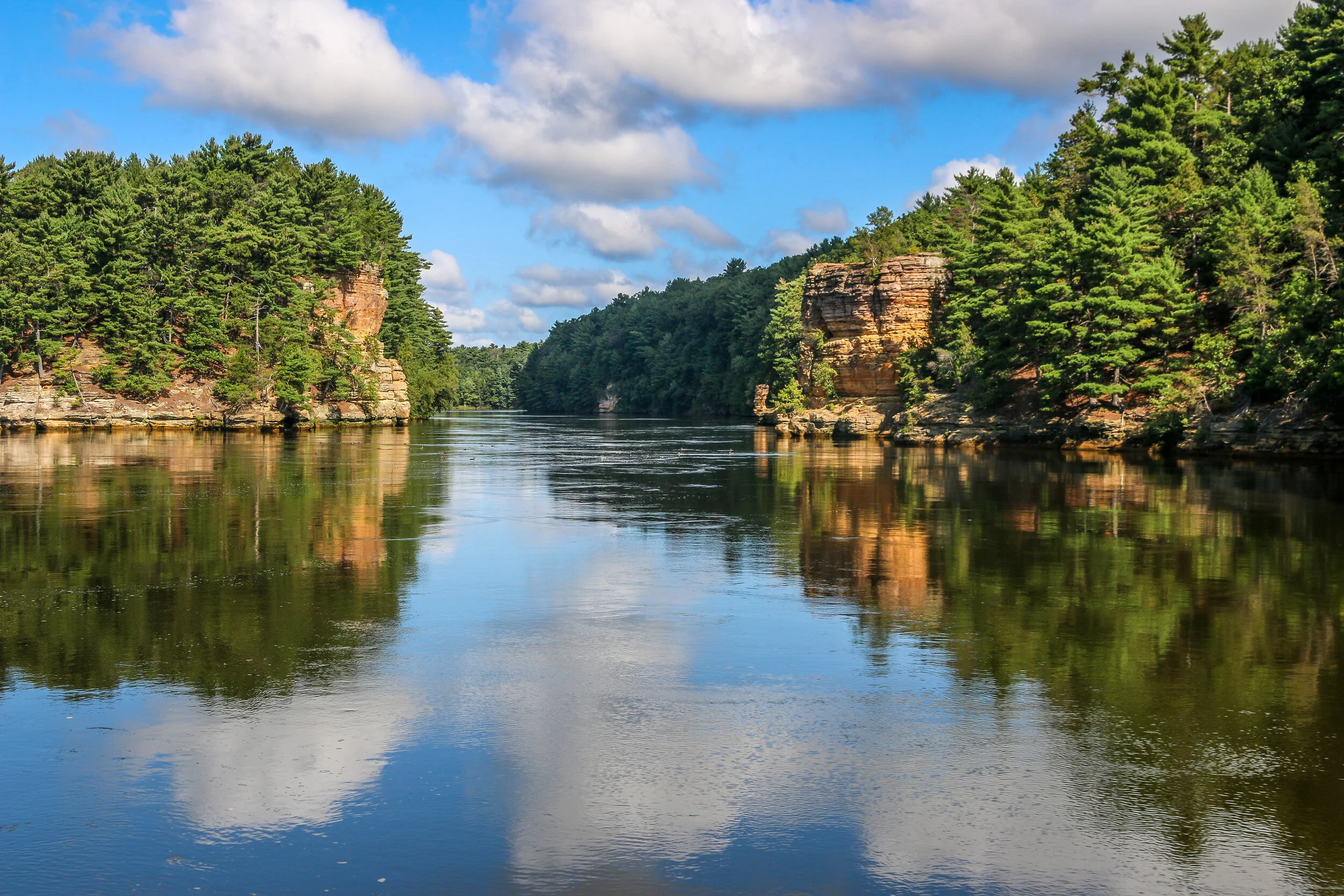
The Driftless Area is a region of the Upper Midwest that was never covered by the last glacier. While much of Wisconsin and its neighboring states were flattened and reshaped by ice, this pocket was left untouched. Because it missed that glacial “drift,” it kept its steep ridges, deep river valleys, cold spring-fed trout streams, and narrow winding valleys.
It feels older because, in a way, it is.
Where is the Driftless Area located?
The Driftless Area covers parts of southwestern Wisconsin, southeastern Minnesota, northeastern Iowa, and a small corner of northwestern Illinois. In Wisconsin, it stretches from the Mississippi River east toward Madison and north into the coulee country around La Crosse.
Most people associate it most strongly with the hills and bluffs of southwestern Wisconsin.
Why is the Driftless Area unique?
Its terrain sets it apart. Instead of flat farmland or broad plains, the Driftless is made of sharp ridgelines, limestone bluffs, wooded hollows, and spring creeks that run cold even in July. Roads curve with the land rather than cutting straight across it. Small towns sit in valleys shaped long before modern survey lines.
The soil, water, and terrain create a different rhythm of farming, building, and living.
Why is it called the Driftless Area?

“Drift” refers to the rock and sediment left behind by glaciers. This region has very little of it. When ice sheets moved across the Midwest, they left debris behind almost everywhere else. Here, the ice never came. The land was left alone.
So it became known as “driftless.”
What states are part of the Driftless Area?
The region spans:
- Wisconsin
- Minnesota
- Iowa
- Illinois
Wisconsin holds the largest and most recognized portion.
What makes the Driftless landscape different?

The hills are steeper. The valleys are narrower. Streams run clearer and colder. Farms sit on ridge tops and valley floors instead of open plains. Fences follow curves. Barns tuck into slopes. Light moves differently here because it has to travel over and around terrain.
It’s not mountainous, but it is far from flat.
Is the Driftless Area worth visiting?
If you value quiet roads, river towns and villages, trout streams, and unhurried places, yes. The Driftless isn’t built for spectacle. It’s built for wandering, fishing, hiking, canoeing, long drives, and sitting on a porch after supper.
It rewards people who don’t need to be entertained every minute.
What towns are in the Driftless Area of Wisconsin?
There are dozens, but some of the better-known include Spring Green, Viroqua, Mineral Point, Prairie du Chien, and small river towns like Avoca, Muscoda, Highland, Cobb and Lone Rock. Many are tucked into valleys you don’t see until you’re nearly in them.
Travel & Visit Questions
Why should you visit the Driftless Area?
You come for landscape and space. For roads that follow rivers. For bluffs that catch evening light. For towns where you can still park along Main Street without circling the block.
It’s a place to slow down without being told to.
What is the Driftless Area known for?
It’s known for trout fishing, scenic drives, Frank Lloyd Wright’s home at Taliesin, river recreation, small organic farms, and fall color that settles into the hills like smoke. It’s also known, quietly, as a place people move to when they want more land and less noise.
What are the best towns to visit in the Driftless Area?
That depends on what you’re looking for. Spring Green draws architecture visitors. Viroqua has a strong food and farm culture. Mineral Point carries its Cornish mining history. River towns like Muscoda and Prairie du Chien follow the Mississippi and Wisconsin Rivers.
None are large. That’s part of the point.
What can you do in the Driftless Area?
You can hike bluff trails, paddle the Wisconsin River, fish cold-water streams, drive ridge roads, visit art studios, explore state parks, tour historic sites, or sit at a café and watch the weather shift across the valley.
There’s room here to do very little, and that counts too.
When is the best time to visit the Driftless Area?
Spring brings trout season and morel mushrooms. Summer brings river days and green hills. Fall brings color and harvest. Winter quiets everything down, but the snow shows the shape of the land clearly.
There isn’t a wrong season. Only different work being done.
Is the Driftless Area good for scenic drives?
Yes. Many of the best views come from ridge roads that rise and fall between valleys. Highways bend and narrow. You often see three ridgelines at once, fading blue into the distance.
The drive is often the destination.
Is the Driftless Area crowded?
Outside of peak fall weekends and a few well-known attractions, it’s rarely crowded. Even then, you can usually drive ten minutes and find space again.
The landscape absorbs people.
Is the Driftless Area good for a weekend trip?
It works well for two or three days. You can base yourself in one town and explore surrounding valleys, parks, and river landings without feeling rushed.
It’s close enough to Madison and the Twin Cities to be reachable, but far enough to feel like a rural getaway.
Spring Green FAQ
What is Spring Green, Wisconsin known for?
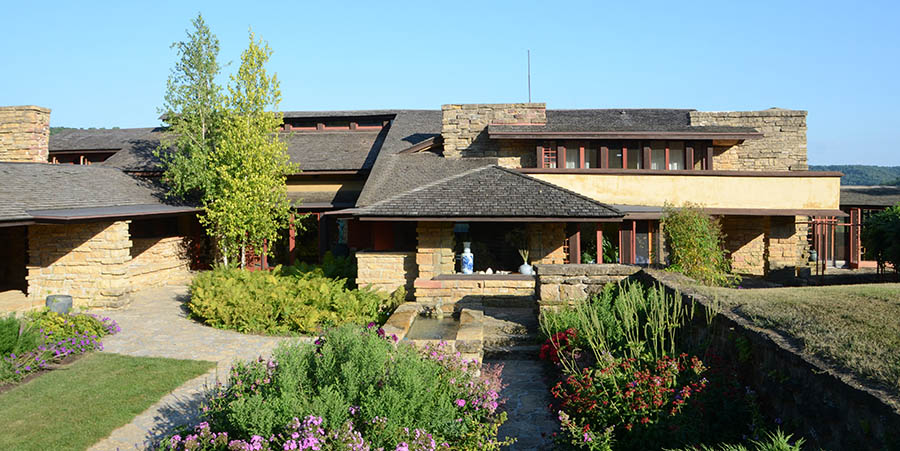
Spring Green is known for architecture, art, and river hills. It is home to Taliesin, the home and studio of Frank Lloyd Wright, and it sits near House on the Rock, a large and unusual attraction built into the hills.
It’s also a small working town with cafés, shops, and river access.
Where is Spring Green located?
Spring Green sits in Sauk County, about 40 miles west of Madison, along the Wisconsin River. It rests in a valley, with ridges rising on either side.
What is there to do in Spring Green?
Visitors tour Taliesin, explore House on the Rock, attend performances at American Players Theatre, paddle the Wisconsin River, hike nearby state parks, and browse small galleries and shops.
The town supports both visitors and year-round residents.

Is Spring Green worth visiting?
If you care about architecture, landscape, boutiques, and small-town pace, yes. It makes a good base for exploring the surrounding Driftless hills.
How far is Spring Green from Madison?
It’s about an hour’s drive west of Madison, depending on weather and traffic.
What is Taliesin in Spring Green?
Taliesin was the home, studio, and architectural school of Frank Lloyd Wright. The buildings sit along a ridge, designed to follow the shape of the land rather than dominate it.
Can you tour Frank Lloyd Wright’s Taliesin?
Yes. Guided tours are available seasonally, allowing visitors to see the home, studio spaces, and grounds.
What is House on the Rock?
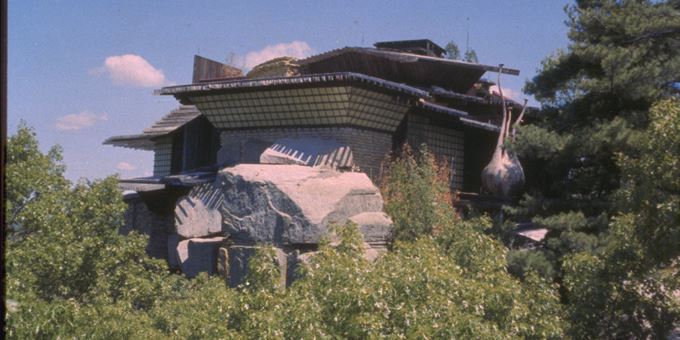
House on the Rock is a large, eclectic attraction built on a wooded ridge. It includes themed rooms, collections, mechanical displays, and a long cantilevered structure extending over the valley. House on the Rock was built by Alex Jordan Jr. Jordan began construction in the 1940s on a wooded ridge near Spring Green, Wisconsin. The first section opened to visitors in 1959. Over the years, he expanded it room by room, adding themed spaces, large collections, mechanical displays, and the long cantilevered Infinity Room that extends out over the valley.
He was not a formally trained architect. The place grew from his imagination and persistence, shaped by the rock beneath it. What stands there now is the result of decades of steady building, additions layered onto the original house as visitors kept coming.
Is House on the Rock near Spring Green?
Yes. It sits just outside of town, within a short drive of Spring Green’s downtown.
Avoca FAQ
Where is Avoca, Wisconsin?
Avoca sits along the Wisconsin River in Iowa County, west of Spring Green and east of Muscoda.
What is Avoca known for?
Avoca is known for river access, small-town quiet, and nearby prairie and bluff land. It serves as a simple base for fishing, canoeing, and exploring back roads.
Is Avoca in the Driftless Area?
Yes. Its steep surrounding ridges and river valley are classic Driftless terrain.
What is near Avoca, Wisconsin?
The Wisconsin River, rural ridge roads, prairie remnants, and nearby towns like Lone Rock and Muscoda.
What is the Avoca Prairie?
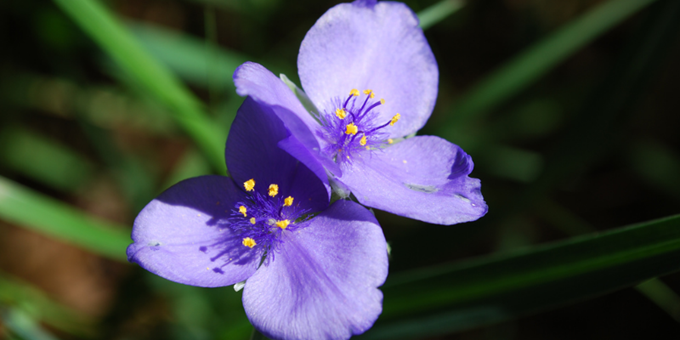
Avoca Prairie is a restored tallgrass prairie near Avoca in southwestern Wisconsin. It sits within the Driftless hills, where ridge lines rise steeply and the Wisconsin River runs broad through the valley.
The prairie protects native grasses and wildflowers that once covered much of southern Wisconsin before settlement and plowing changed the land. Big bluestem, Indian grass, coneflowers, and compass plant grow there now. In late summer the grasses stand shoulder high and move in the wind like water.
There are walking paths through the prairie, open to the public. It’s a quiet place. You hear insects, wind, and sometimes the call of red-winged blackbirds. From certain spots you can look out across the river valley and see how the prairie fits into the larger Driftless landscape.
Avoca Prairie is not large or heavily developed. It’s a patch of what used to be common ground, tended now so it can remain.
Muscoda FAQ
Where is Muscoda, Wisconsin located?
Muscoda lies along the Wisconsin River in Grant and Iowa counties.
What is Muscoda known for?
Muscoda is known for river recreation, fishing, and its annual morel mushroom festival.
Why is Muscoda called the Morel Mushroom Capital?
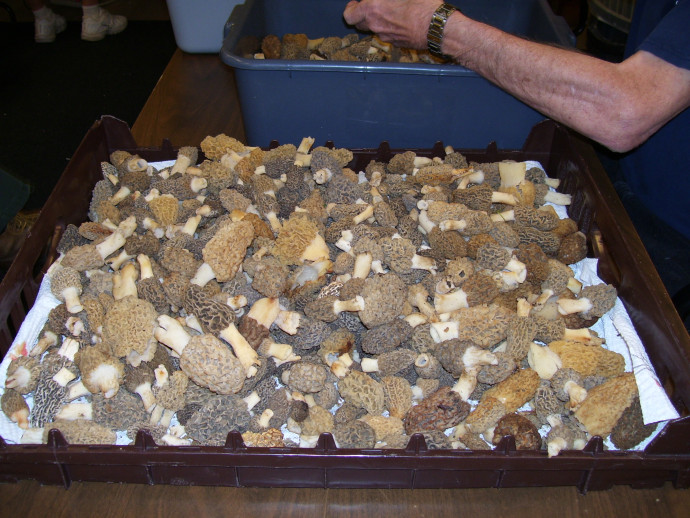
Muscoda is called the Morel Mushroom Capital because morel mushrooms grow well in the woods and river bottoms surrounding the town, and the community chose to build a tradition around that short spring season.
Morels favor hardwood forests, especially elm, ash, and cottonwood, and they often appear in sandy, well-drained soils like those along the Wisconsin River. In April and May, when the ground warms and the nights stay damp, people head into the timber with mesh bags and a steady eye. The season is brief. You either catch it or you don’t.
Over time, Muscoda began hosting an annual Morel Mushroom Festival, bringing together foragers, families, and visitors. What started as a local celebration of something already happening in the woods became part of the town’s identity.
It isn’t that morels grow only there. They grow across much of the Driftless and beyond. But Muscoda chose to name the season and gather around it, and the name stuck.
What can you do in Muscoda, Wisconsin?
Fish, boat, camp, search for mushrooms in season, or use it as a starting point for exploring nearby valleys and ridge farms.
Is Muscoda on the Wisconsin River?
Yes. The river runs directly along town and shapes much of its activity.
Lone Rock FAQ
Where is Lone Rock, Wisconsin?
Lone Rock sits along the Wisconsin River between Spring Green and Avoca. Lone Rock is a small river town in Richland County, set along the Wisconsin River between Spring Green and Avoca. You reach it by two-lane highway that follows the valley floor, with bluffs rising on either side.
Life in Lone Rock moves at the pace of the river. Fishing, boating, and camping shape much of the seasonal activity. In summer, boats idle at the landing. In fall, the bluffs turn color above the rooftops. Winter settles in quietly, and the river fog sometimes hangs low in the mornings.
Lone Rock sits firmly within the Driftless Area. The steep ridges, narrow valleys, and winding roads are part of daily life there, not scenery set aside for visitors. It’s a place people pass through on their way along the river, and a place some choose to stay.
What is Lone Rock known for?
It’s known for its quiet river setting and the large sandstone formation rising near town.
Why is it called Lone Rock?
The town takes its name from the large sandstone formation that stands apart from the surrounding hills. That solitary rock has long been a landmark for river travelers and residents alike. It’s not towering in a western sense, but in this valley it holds its ground and gives the town its bearing.
Is Lone Rock in the Driftless Area?
Yes. Like its neighbors, it sits within the unglaciated hills of southwestern Wisconsin.
Regional Identity & Lifestyle

What does “Driftless” mean in Wisconsin?
It refers to land that lacks glacial drift. In practical terms, it means hills, bluffs, cold streams, and roads that bend.
What is the Driftless lifestyle like?
It tends to be rural, independent, and tied to land. Many people farm, fish, teach, build, or commute modest distances. Community shows up in volunteer fire departments, farmers markets, shared tools, and neighbors who plow one another’s driveways.
Is the Driftless Area rural?
Largely, yes. There are small cities nearby, but much of the region is farmland, woodland, and river valley.
What is it like living in the Driftless Area?
It involves distance. Groceries may be a drive. Winter roads require patience. But the trade is space, sky, and a sense of being placed somewhere specific.
Why does the Driftless feel secluded?
The terrain interrupts long sightlines and straight highways. Valleys hold towns out of view. You don’t pass through by accident.
Are there highways in the Driftless Area?
Yes, but many are two-lane roads that follow ridges and rivers rather than cutting across them.
Is the Driftless Area mountainous?
No. The elevations are modest. But the relief between ridge top and valley floor can be steep enough to feel dramatic.
Why are there bluffs in the Driftless Area?
Because the land was not leveled by glaciers. Over time, rivers carved into ancient rock, leaving steep bluffs and layered limestone faces.
Read More: